














Through the tall gray doors that students walk through every day to get into class, they enter a building where certain guidelines must be followed. If the students don’t, it may lead to problems.
Students may not realize that the limits of their First Amendment rights in schools have been defined by several landmark Supreme Court rulings.
In general, all citizens have the fundamental rights to free speech, religion, the press, peaceful assembly, and the right to petition the government. However, there are cases where a student’s right to free speech can be restricted if that speech disrupts the educational environment or invades the rights of others.
According to the BHS handbook, students are not allowed to harm students with their words. For instance, speech that falls under the anti-harassment policy, such as the use of racial slurs (whether spoken or written), is prohibited. Violators of this policy may face administrator-determined consequences.
If students post anything online, they need to be beware that it will leave a digital footprint. If a student is found responsible for cyberbullying another student and the incident is reported to the school, administrators are permitted to issue consequences, including suspension or expulsion.
There have been many Supreme Court cases that have affected the students and schools on what they can and can’t do on school grounds.
One of the more recent cases is the Mahanoy Area School District v. B.L. in 2021. This is a case where a student didn’t make a cheer team that they wanted to be in for school, and she then went online and said, “F*** school, f*** softball, f*** cheer f*** everything.” Some of the students then went to the coach and told them what she said online, and then the coaches suspended her from the junior varsity team.
The student felt like her first amendment was violated, so she went to court. The courts in turn said that the school can’t regulate what students post online when they are not on school grounds. If the student did post it on school grounds, then the school could regulate it when it breaks school rules.
Being a student, it is necessary to know what you can and can’t do. There have been many cases throughout the years where students felt like their rights have been violated. This is where they need to look in the student handbook and see what they can do on the school campus.
If any students have questions about their first amendment rights, they need to ask questions.
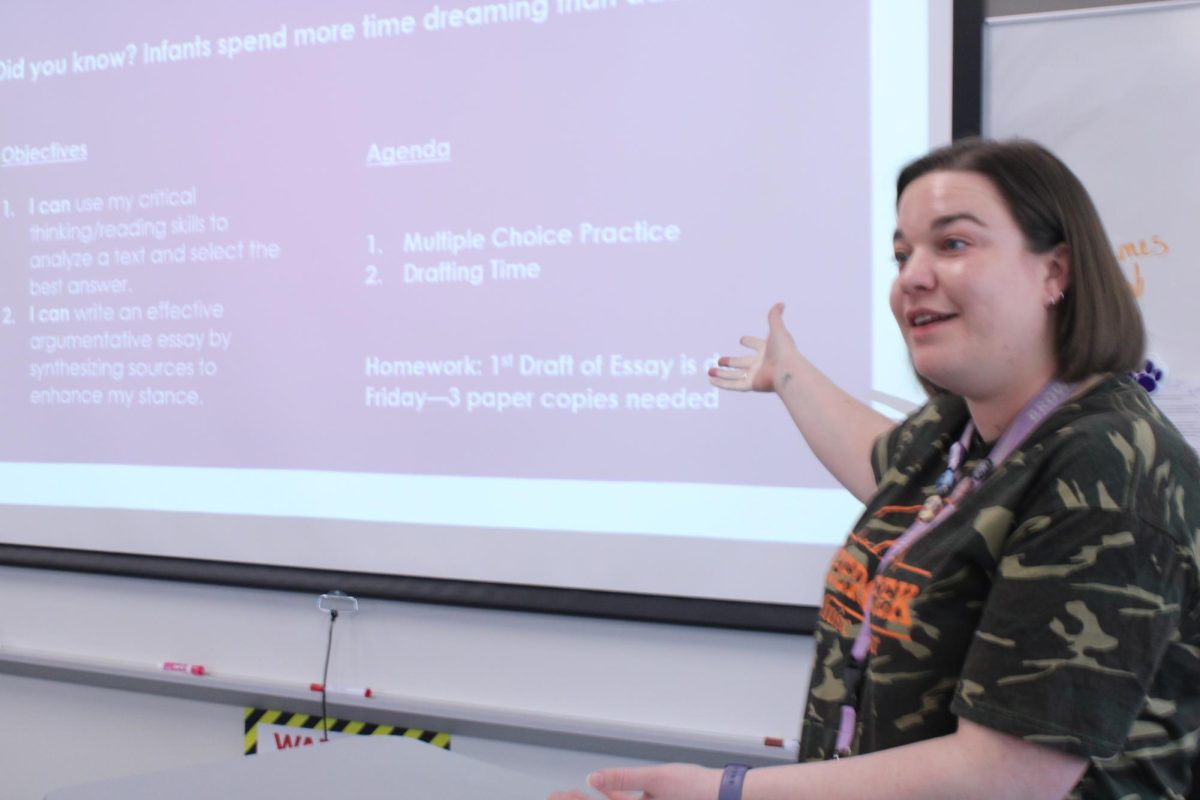
“ I think it’s protected all the time,” government and history teacher Joel Casey said. “You are protected to say what you want, to some degree. But does that does not mean you are protected from [the] consequence of your opinions.”
Story continues below advertisement
