















Up to 100 billion garments are produced by the fashion industry every year, yet as much as 92 million tons of clothing end up in landfills annually. Fast fashion is a manufacturing method focused on producing high amounts of clothing quickly and cheaply. Knowingly or unknowingly, many people participate in fast fashion.
Junior Abigail Altschul said, “they [fast fashion companies] exploit their workers, and they just don’t do things sustainably.”
It can be difficult to understand how fast fashion becomes such a large-scale problem. Senior Olivia Wheat explained that “we’re seeing trends, but then they go away so fast, and it’s not made out of good materials, and it just starts piling up, and it just keeps getting worse.”
One proven way to combat fast fashion is recycling and reducing through thrifting. Thrifting is the act of shopping secondhand to develop a personal style, save money and focus on the environmental impact of clothing. People shop secondhand for a multitude of reasons, combating fast fashion being one of them. These shoppers take pride in knowing their purchases don’t contribute to clothes ending up in landfills.
“I think it [thrifting] kind of opened my eyes to really how prevalent it [fast fashion] is, especially, I mean, we’re in high school; things are cheap and convenient and trendy,” junior Anna Pierce said. “You see other people wearing it, which obviously encourages you to do the same thing, because you want to fit in, but you deserve to stand out, and thrifting makes that so much easier.”
On a personal level, it can help students develop their own unique personal styles.
“Clothes are getting more expensive, and I’ll see more people my age being able to buy their own clothes and explore their own style without whatever the trends are,” Wheat said. “People are getting a lot of their individuality.”
This individuality is developed when people go out and see alternate styles different from more mainstream styles.
“It [thrifting] helped me develop that, especially because at the age range, it was kind of the age that most people start to figure out kind of who they are, what they’re into, what they like,” Pierce said. “I think thrifting really helped me do that and develop my kind of style.”
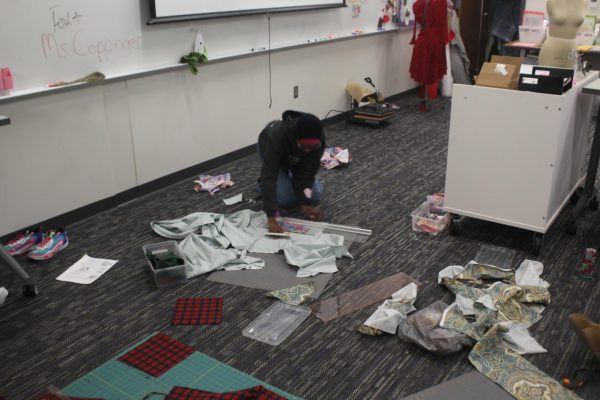
Fashion teacher Rachel Day has a similar opinion on the issue. She believes in addition to the personal style development, thrifting helps students try new things without spending a fortune at retail stores.
“It lets you experiment a little bit more and see more unique options, which then will let you develop your sense of style a little bit better,” Day said. “I think it’s a really important thing when you’re young to get a really good sense of self.”
While beneficial, there are a few drawbacks that thrifting has, and retail stores remain popular for their convenience and accessibility.
“They don’t have multiple of a certain sizes, so that’s definitely a bummer sometimes,” Altschul said.
Up until recently, thrifting was heavily stigmatized. Many people believed it to be “dirty” or indicative of one’s wealth.
“I think when I was young, I felt really ashamed of it. I felt nervous to say that, ‘Oh, I got this at Goodwill’, but now it’s like, oh, yeah, I thrifted this,” Day said.
Recently, thrifting has begun trending on social media. It’s becoming “cool” to thrift, especially when you begin to see more thrifting influencers. Social media has helped to push away a lot of the stigma associated with thrifting.
“I was gonna wear the second-hand things no matter what, because they’re cute and I liked them, but I still felt self conscious that people could tell that I was wearing them secondhand,” Wheat shared. “Once it started trending, I just felt like so much better because people have gotten able to broaden their horizons, and there’s not that stigma, because people are just more open to it now.”
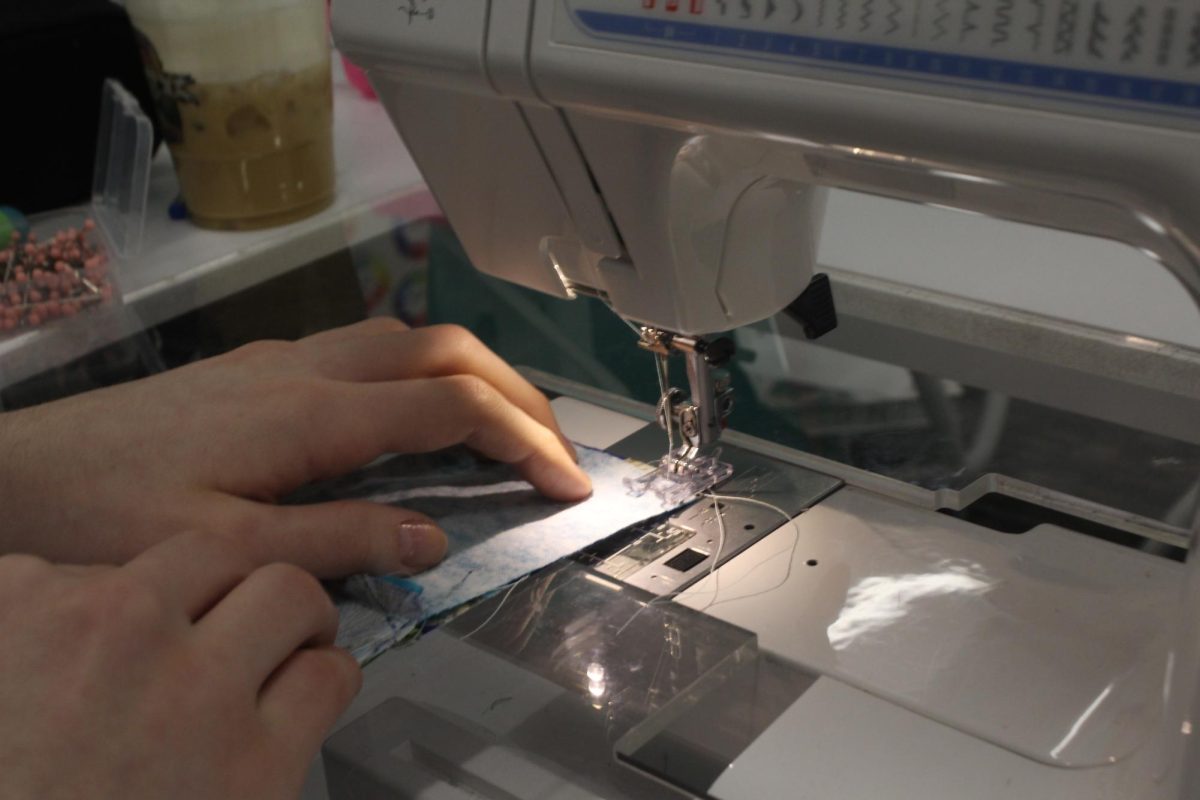
Regardless of differing opinions, thrifting has slowly accumulated more support at BHS. So much so, that a thrifting club has been established in BHS. Their dream is to eventually have a closet where students can come in and shop with thing they’ve either repurposed or sewn.
As thrifting continues to grow in popularity at BHS, students say it offers an accessible alternative to fast fashion while encouraging individuality.
“If you don’t find something the first time, just go at least one other time, because you’re going to find something that you’ll love eventually,” Altschul said.

