


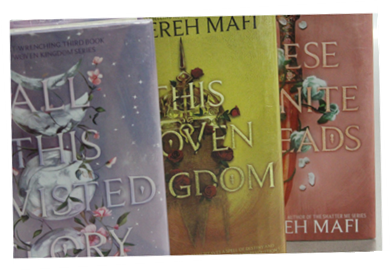
Beyond a simple fantasy book, Tahereh Mafi’s “This Woven Kingdom” is a political statement, written to speak directly to the experience of oppression and the weaponization of identity.
Mafi is an Iranian American. She drew a lot of her inspiration from her background creating a folklore that’s a blend of Persian mythology. Her main inspiration behind the series was the epic poem “The Shahnameh” along with jinn stories from Islamic folklore. “The Shahnameh” is a long epic poem written by the Persian poet Ferdowsi between c. 977 and 1010 CE and includes themes of good and evil, and the topic of cultural identity and history.
“This Woven Kingdom” by Tahereh Mafi is a story that begins with Alizeh, the long-lost heir to the persecuted Jinn kingdom, who is forced to live in hiding as a servant among the ruling human “Clay” people. Her life of anonymity is upended when her path crosses with Kamran, the Crown Prince of the oppressive kingdom of Ardunia.
Their forbidden and fated connection quickly ignites a political explosion, putting their destinies and duties against each other, an imitation of the age-old conflict involving the Jinn, the humans and the devil Iblis. This central conflict is directly inspired by Mafi’s background.
During an interview with Vegas Film Critic prior to the release of her book, Mafi expresses the source of inspiration for the book. “A lot of the stories in the folklore and the traditions and the culture that inspired me and informed my identity,” Mafi said. “A lot of that made its way into this story.”
 Identity as a Weapon
The unique thing about “This Woven Kingdom” is the expression of this theme through symbols. A snoda is a face garment that servants wear to hide their identity. It blurs their features without obstructing their vision and is evidence of Alizeh’s oppression in the books. It is explained in the book how it concealed her distinctive, tell-tale eyes which would reveal that she’s a Jinn.
In the real world, there’s a spectrum of this. The uniforms and dress codes for service workers are a small example of the separation of a specific group of people to visually classify them. On a more serious scale, this separation can be used as a means of persecution and suppression of minority groups. Marginalized groups must suppress their language, dress and traditions to avoid violent discrimination.
The Taliban in Afghanistan enforce the use of niqab and the burka on millions of women. It is a rule mandated that they
must cover their faces and their entire bodies in public. This is a real-life example of a group of people being forced to hide parts of their identity through a physical barrier.
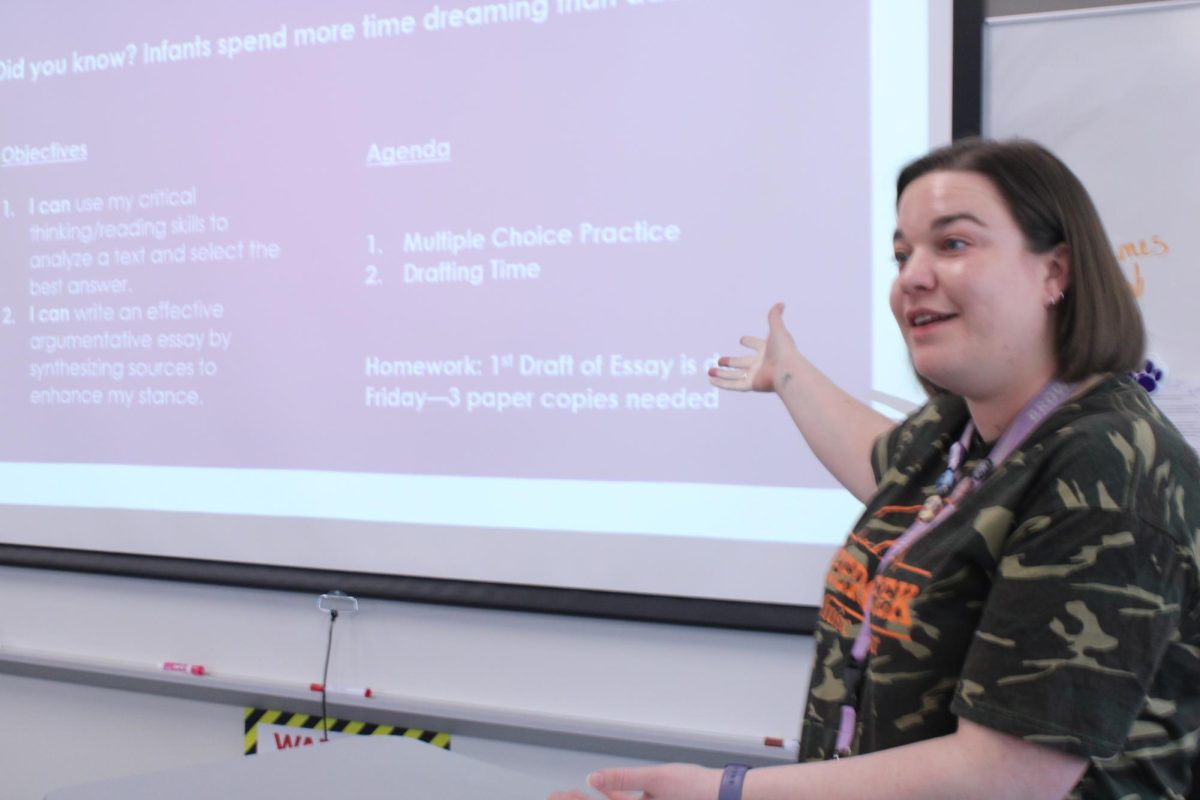
There were many other examples of these restrictions. History teacher Linda Walters shared, “Women in Athens weren’t allowed to leave the home without escorts and were required to cover up.”
Systemic Racism in a Fantasy Realm
Throughout the series, a reoccurring topic is the Jinn persecution. It is an oppression of the Jinn by the Clay based on their affiliation with Iblees. They are forced into hiding, and it’s a representation of economic inequality in our world perpetuated by systemic racism and poverty.
Redlining is a discriminatory practice where financial institutions denied services like mortgages to residents of minority neighborhoods in the 30s. In addition to redlining, segregation is another example of oppression. It was often enforced by laws like the Jim Crow laws in the U.S. and apartheid in South Africa. These practices systematically denied the oppressed group access to equal fundamental resources to live a fulfilling life such as education, housing, employment, etc.
“It’s a lack of opportunity, a lack of resources,” Walters said. “And so even if that oppression is lifted, it’s not like it just magically heals everything.”
By expressing these grim realities through the lens of a fantasy narrative, Mafi is able to critique power structures that plagued the world in the past and present. It forces the confrontation of our own most persistent conflicts and creates space for uncomfortable conversations to address them.